

The Ultimate Beginner’s Guide to Building Muscle Naturally
Building muscle is one of the most common fitness goals for beginners. Whether your goal is to look stronger, improve your confidence, increase your physical strength, or live a healthier lifestyle, building muscle can completely transform your body.
However, many beginners start their fitness journey with confusion. They don’t know which exercises they should do, how much protein they need, how often they should train, or whether supplements are necessary.
The truth is that building muscle naturally is not as complicated as many people think. You don’t need expensive supplements or extreme workout routines. You need the right combination of:
- Proper strength training
- Balanced nutrition
- Enough rest and recovery
- Consistency and patience
Muscle growth takes time, but with the right approach, anyone can build a stronger and healthier body.
In this beginner-friendly guide, you will learn everything about muscle building, including workouts, diet, recovery, and mistakes that beginners should avoid.
What Is Muscle Building?
Muscle building is the process of increasing the size and strength of your muscles through resistance training, proper nutrition, and recovery.
When you perform exercises like weightlifting, push-ups, squats, or resistance exercises, your muscles experience small amounts of stress. Your body then repairs these muscle fibers and makes them stronger and bigger.
This process is called muscle hypertrophy.
Muscle growth does not happen overnight. It requires regular workouts, proper food, and a healthy lifestyle.
How Does Muscle Growth Work?
Muscle growth happens through three important steps:
1. Training and Muscle Stimulation
When you exercise, you create tension in your muscles. This tension signals your body that your muscles need to become stronger.
Some effective muscle-building exercises include:
- Squats
- Bench Press
- Push-ups
- Pull-ups
- Deadlifts
- Shoulder Press
These exercises help target multiple muscles and improve overall strength.
2. Proper Nutrition
After a workout, your body needs nutrients to repair and build muscle tissue.
Protein is one of the most important nutrients because it provides amino acids that help repair damaged muscles.
Without proper nutrition, your body cannot effectively build new muscle.
3. Recovery
Many beginners believe that working out every day will create faster results.
However, muscles grow during recovery, not while you are exercising.
Your body needs enough rest and sleep to repair muscle fibers and prepare for the next workout.
Benefits of Building Muscle
Building muscle provides many benefits beyond improving your appearance.
1. Increased Strength
One of the biggest benefits of muscle training is improved strength.
A stronger body helps you perform daily activities more easily, such as:
- Carrying heavy items
- Playing sports
- Performing physical tasks
- Improving stamina
2. Better Metabolism
Muscle requires more energy to maintain compared to fat.
Having more muscle can help support a healthy metabolism and improve your body composition.
3. Improved Confidence
Building muscle can improve your confidence and self-image.
Seeing progress in your body creates motivation and helps develop discipline.
4. Better Overall Health
Strength training supports:
- Stronger bones
- Better posture
- Improved balance
- Reduced risk of injuries
- Better physical performance
Important Rules for Beginners
Before starting your muscle-building journey, follow these important rules.
1. Focus on Proper Form
Many beginners make the mistake of lifting heavy weights without learning the correct technique.
Poor form can increase the risk of injury.
Always focus on:
- Controlled movements
- Correct posture
- Full range of motion
Quality repetitions are more important than lifting heavy weights.
2. Follow Progressive Overload
Progressive overload means slowly increasing the challenge on your muscles over time.
You can improve by:
- Adding more weight
- Increasing repetitions
- Improving exercise technique
- Increasing workout intensity
Small improvements create big results over time.
3. Stay Consistent
Consistency is the most important factor in muscle building.
A person who follows a simple workout plan consistently will achieve better results than someone who changes plans frequently.
Focus on building habits that you can follow for months and years.
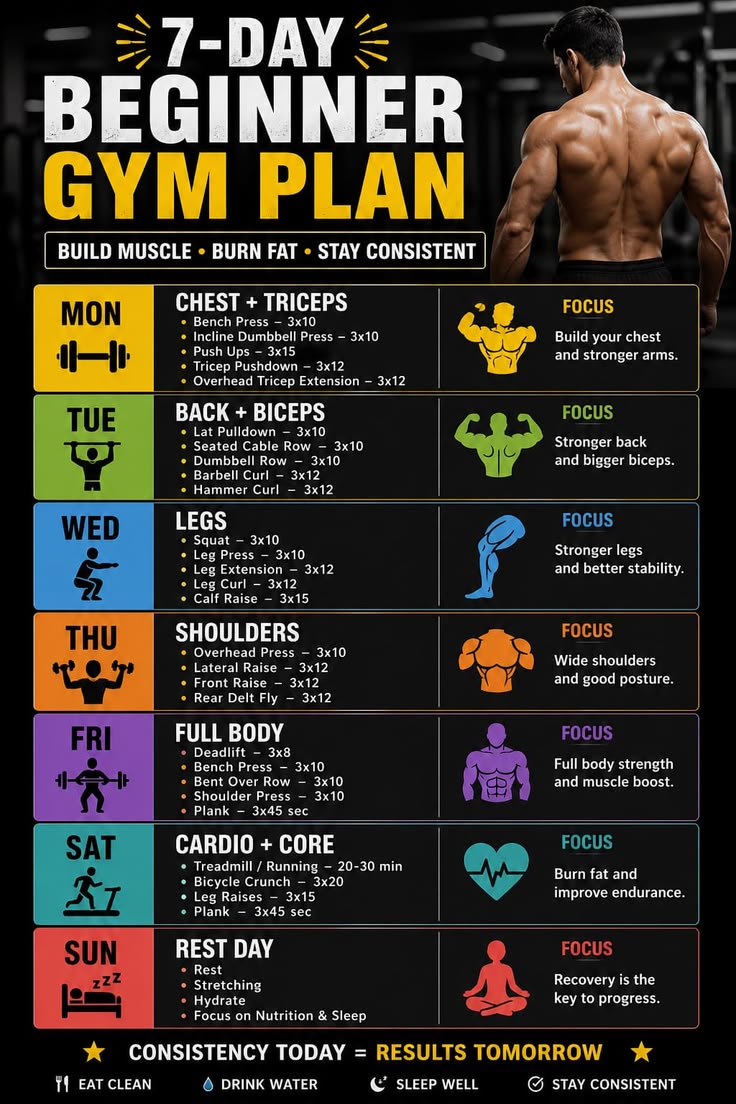
Beginner Workout Plan for Muscle Growth
Beginners should focus on compound exercises because they work multiple muscles together.
A simple three-day workout routine can be effective.
Day 1: Chest, Shoulders and Triceps
Exercises:
- Push-ups – 3 sets
- Bench Press – 3 sets
- Shoulder Press – 3 sets
- Dumbbell Fly – 3 sets
- Triceps Pushdown – 3 sets
Day 2: Back and Biceps
Exercises:
- Pull-ups – 3 sets
- Lat Pulldown – 3 sets
- Barbell Row – 3 sets
- Dumbbell Curl – 3 sets
- Hammer Curl – 3 sets
Day 3: Legs and Core
Exercises:
- Squats – 3 sets
- Lunges – 3 sets
- Leg Press – 3 sets
- Calf Raises – 3 sets
- Plank – 3 rounds
Always focus on learning the movement correctly before increasing weight.
Nutrition for Muscle Building
Exercise alone is not enough to build muscle.
Your diet plays a major role in muscle growth.
Your body needs enough calories, protein, carbohydrates, and healthy fats.
Importance of Protein for Muscle Growth
Protein is essential for muscle repair and growth.
Good protein sources include:
- Eggs
- Chicken
- Fish
- Milk
- Paneer
- Yogurt
- Lentils
- Beans
- Soybeans
Eating enough protein daily helps your muscles recover faster after workouts.
Role of Carbohydrates
Carbohydrates provide energy for workouts.
Many beginners avoid carbs, but healthy carbohydrates are important for improving workout performance.
Healthy sources include:
- Rice
- Oats
- Potatoes
- Fruits
- Whole grains
Healthy Fats
Healthy fats support important body functions and hormone production.
Sources include:
- Nuts
- Seeds
- Peanut Butter
- Olive Oil
- Avocado
A balanced diet should include all three macronutrients:
- Protein
- Carbohydrates
- Healthy fats
Importance of Sleep and Recovery
Sleep is one of the most important parts of muscle growth.
During sleep, your body repairs damaged muscles and prepares for future workouts.
Beginners should aim for 7–9 hours of quality sleep every night.
Good recovery habits include:
- Getting enough sleep
- Drinking enough water
- Taking rest days
- Managing stress
Common Muscle Building Mistakes Beginners Make
1. Changing Workout Plans Frequently
Many beginners change their workout routine every few days because they don’t see instant results.
Muscle growth requires patience.
Stick with a good plan for enough time.
2. Ignoring Nutrition
Some people train hard but do not eat properly.
Your body needs enough nutrients to repair and build muscles.
3. Training Without Rest
Working out every day without recovery can slow your progress.
Rest days allow your muscles to grow.
4. Expecting Quick Results
Building muscle takes time.
Do not compare your progress with others.
Focus on improving yourself consistently.
Do Beginners Need Supplements?
Supplements are not necessary when you are starting.
Most beginners can build muscle through proper food and training.
Some common supplements include:
- Protein powder
- Creatine
- Multivitamins
Remember, supplements should support your diet, not replace healthy food.
How Long Does It Take to Build Muscle?
The time required to build muscle depends on:
- Genetics
- Training consistency
- Diet
- Sleep
- Experience level
Beginners usually notice strength improvements within a few weeks.
Visible body changes normally require several months of consistent effort.
Remember, muscle building is a long-term journey.
Frequently Asked Questions
Can beginners build muscle naturally?
Yes, beginners can build muscle naturally with proper training, nutrition, and recovery.
How many days should beginners workout?
Beginners can start with 3–4 workout days per week.
Is protein necessary for muscle growth?
Yes, protein helps repair and build muscle tissue.
Can I build muscle at home?
Yes, beginners can build muscle at home using bodyweight exercises, resistance bands, or dumbbells.
Is gym required for muscle building?
No, but a gym provides more equipment and options for increasing workout difficulty.
Final Thoughts
Muscle building for beginners does not require complicated methods or shortcuts.
The foundation is simple:
- Train consistently
- Eat nutritious food
- Get enough protein
- Sleep properly
- Stay patient
Your body will not change in a few days, but every workout and healthy meal moves you closer to your goal.
Focus on building strong habits and staying consistent. With dedication and the right approach, you can naturally build muscle, increase strength, and create a healthier version of yourself.
