

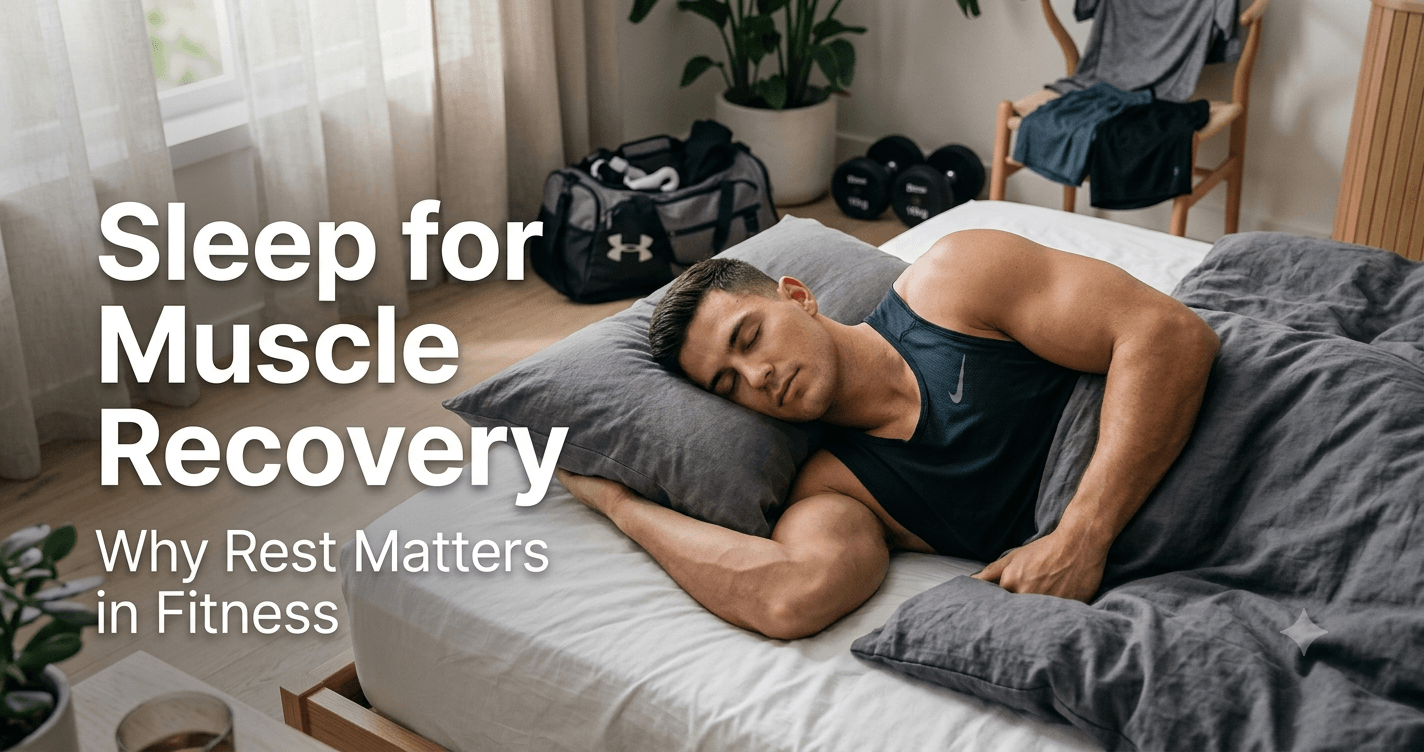
Importance of Sleep in Muscle Recovery and Fitness
Introduction
When people think about fitness, they usually focus on workouts and nutrition. They spend hours in the gym, follow a healthy diet, and take supplements to improve their performance. However, one important factor is often ignored: sleep.
Sleep plays a major role in muscle recovery, strength development, and overall fitness progress. No matter how hard you train, your body needs proper rest to repair muscles, restore energy, and prepare for the next workout.
Many beginners believe that exercising more will always lead to faster results, but without enough sleep, your progress can slow down. Good quality sleep is just as important as training and nutrition when it comes to achieving fitness goals.
In this article, we will understand why sleep is important for muscle recovery, how it affects fitness performance, and how you can improve your sleep quality.
Why Is Sleep Important for Fitness?
Sleep is the time when your body performs important recovery processes. During exercise, your muscles experience stress and small tears. Sleep allows your body to repair these tissues and make them stronger.
A lack of sleep can affect:
- Muscle recovery
- Energy levels
- Workout performance
- Hormone balance
- Mental focus
- Overall health
For anyone trying to build muscle, lose fat, or improve fitness, quality sleep should be a priority.
1. Sleep Helps Muscle Recovery
Muscle growth does not happen only during workouts. Exercise creates the stimulus, but recovery is when your body repairs and builds muscles.
During deep sleep, your body releases important hormones that support muscle repair and growth.
Getting enough sleep helps:
- Repair damaged muscle fibers
- Reduce muscle soreness
- Improve recovery after workouts
- Prepare your body for future training
Without proper sleep, your muscles may take longer to recover, which can affect your progress.
2. Sleep Supports Muscle Growth
For people who want to build muscle, sleep is extremely important. Your body needs enough recovery time to increase muscle strength and size.
During quality sleep, your body produces growth-related hormones that help with:
- Muscle development
- Tissue repair
- Recovery
- Maintaining healthy body composition
Even with a perfect workout plan and diet, poor sleep can limit your muscle-building results.
3. Improves Workout Performance
Have you ever noticed that you feel weak or tired after a poor night’s sleep? This happens because sleep directly affects your energy and performance.
Good sleep helps you:
- Lift heavier weights
- Perform exercises with better focus
- Maintain stamina
- Improve coordination
When you are well-rested, your workouts become more effective.
4. Helps Maintain Hormone Balance
Hormones play an important role in fitness and body transformation.
Poor sleep can negatively affect hormones related to:
- Muscle growth
- Fat storage
- Hunger control
- Energy levels
Lack of sleep may increase hunger hormones, making it harder to control food cravings.
Good sleep helps maintain a healthy hormonal balance that supports fitness goals.
5. Supports Fat Loss and Weight Management
Many people focus only on diet and exercise for weight loss, but sleep also plays an important role.
Poor sleep can make weight loss more difficult because it may:
- Increase cravings for unhealthy foods
- Reduce energy for workouts
- Affect metabolism
- Make it harder to maintain a calorie deficit
Getting enough sleep supports healthier eating habits and better fitness results.
How Much Sleep Do You Need?
Sleep requirements can vary depending on age, lifestyle, and activity level.
For most adults:
7–9 hours of quality sleep per night is recommended.
People who train intensely may need additional recovery time because their bodies experience more physical stress.
The quality of sleep is also important. Sleeping for 8 hours with frequent interruptions may not provide the same benefits as deep, uninterrupted sleep.
Signs You Are Not Getting Enough Sleep
Your body often gives signals when you need more rest.
Common signs include:
- Feeling tired throughout the day
- Low workout performance
- Slow muscle recovery
- Lack of motivation
- Increased food cravings
- Difficulty concentrating
- Feeling irritated easily
If you experience these regularly, improving your sleep routine can help.
Best Tips to Improve Sleep Quality
1. Maintain a Regular Sleep Schedule
Try to sleep and wake up at the same time every day. A consistent routine helps your body maintain a healthy sleep cycle.
2. Reduce Screen Time Before Bed
Mobile phones and screens can affect your ability to fall asleep.
Try avoiding screens 30–60 minutes before bedtime.
3. Create a Comfortable Sleep Environment
Make your bedroom:
- Dark
- Quiet
- Comfortable
- Cool
A relaxing environment improves sleep quality.
4. Avoid Heavy Meals Before Sleeping
Eating very heavy meals close to bedtime may affect digestion and sleep quality.
Try to finish your main meal a few hours before sleeping.
5. Manage Stress
Stress can make it difficult to sleep properly.
Relaxation techniques such as:
- Deep breathing
- Meditation
- Light stretching
can help your mind and body relax.
Sleep and Workout Timing
Your workout schedule can also affect your sleep.
Exercise is generally beneficial for sleep, but very intense workouts late at night may make some people feel more alert.
Find a workout time that works best for your routine and allows enough recovery before bedtime.
Common Sleep Mistakes Fitness Beginners Make
1. Thinking Sleep Is Less Important Than Exercise
Many beginners focus only on training and ignore recovery. Remember, rest is part of the fitness process.
2. Sleeping Too Little
Regularly sleeping 4–5 hours can negatively affect performance and recovery.
3. Having an Irregular Sleep Routine
Sleeping at different times every day can disturb your natural body clock.
4. Using Phones Before Bed
Excessive screen time before sleeping can reduce sleep quality.
The Connection Between Training, Nutrition, and Sleep
A successful fitness journey requires three important elements:
1. Exercise
Workouts create the stimulus for improvement.
2. Nutrition
Food provides the nutrients needed for energy and recovery.
3. Sleep
Sleep allows your body to repair and grow.
Ignoring any one of these areas can slow down your progress.
Conclusion
Sleep is one of the most important but often overlooked parts of fitness. It helps your muscles recover, improves workout performance, supports hormone balance, and contributes to better overall health.
Your fitness journey is not only built in the gym. It is also built through proper recovery, nutrition, and quality sleep.
If you want better results from your workouts, make sleep a priority. Train consistently, eat properly, and give your body the rest it needs to become stronger and healthier.
Remember, recovery is not a waste of time — it is a necessary part of achieving your fitness goals.
