

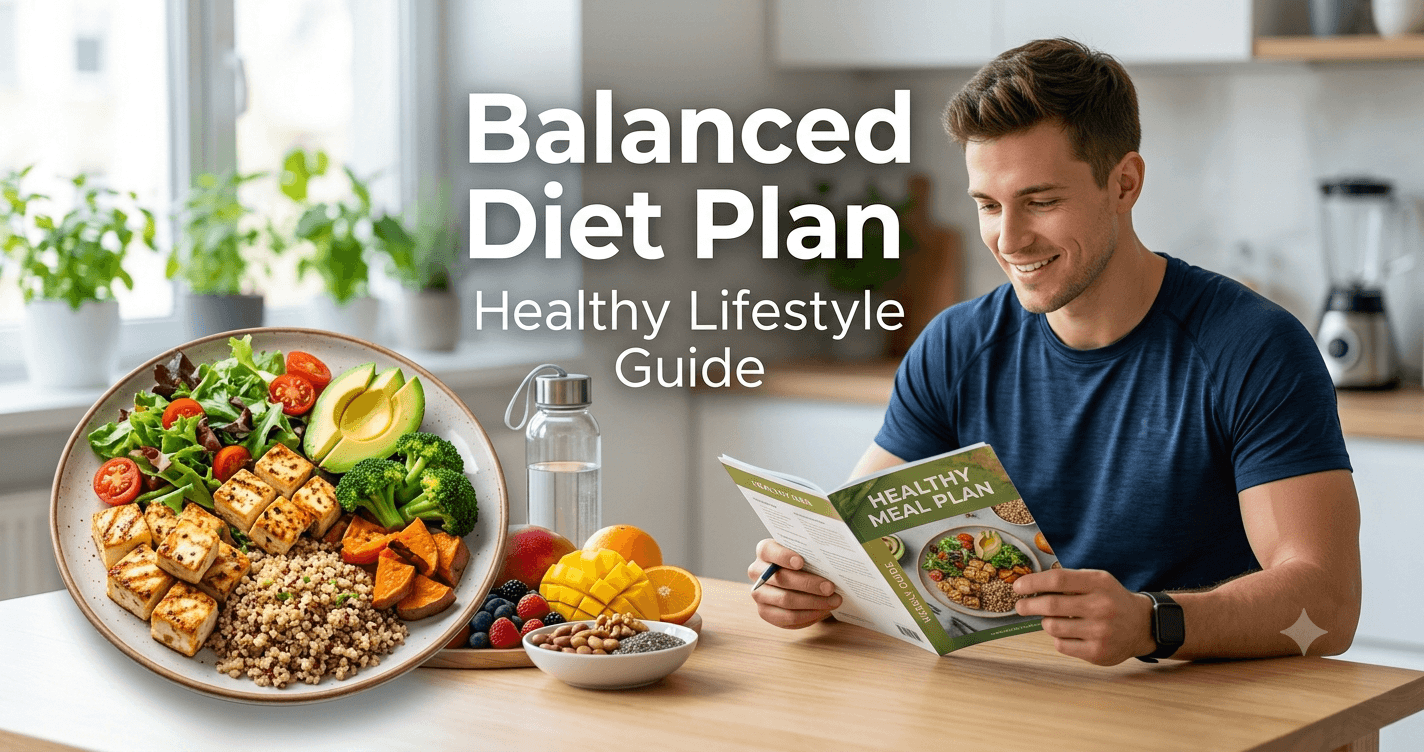
How to Create a Balanced Diet Plan for a Healthy Lifestyle
Introduction
A healthy lifestyle is not only about exercising regularly; nutrition also plays an important role in maintaining a strong and active body. Many people start fitness journeys with workouts but ignore the importance of a balanced diet.
A balanced diet provides your body with the right amount of nutrients, energy, and essential elements needed for daily activities, muscle recovery, and overall health. Whether your goal is weight loss, muscle growth, or simply improving your lifestyle, creating a proper diet plan can make a big difference.
A good diet does not mean following strict rules or avoiding all your favorite foods. It means choosing the right foods, maintaining proper portions, and creating healthy habits that you can follow for a long time.
In this article, we will learn how to create a balanced diet plan for a healthy lifestyle and understand the importance of proper nutrition.
What Is a Balanced Diet?
A balanced diet is a meal plan that includes all essential nutrients in the right amounts. Your body needs different types of nutrients to function properly.
A healthy balanced diet includes:
- Protein
- Carbohydrates
- Healthy fats
- Vitamins
- Minerals
- Fiber
- Water
Each nutrient has a different role in supporting your health, energy levels, and fitness goals.
Why Is a Balanced Diet Important?
A balanced diet provides many benefits for your body and mind.
1. Provides Energy
Food is the fuel your body uses for daily activities and workouts. Eating the right nutrients helps maintain energy levels throughout the day.
2. Supports Muscle Growth and Recovery
Protein-rich foods help repair muscles after exercise and support muscle development.
3. Helps Maintain Healthy Weight
A balanced diet helps control calorie intake and supports healthy weight management.
4. Improves Overall Health
Proper nutrition supports:
- Strong immunity
- Better digestion
- Improved mood
- Healthy skin
- Better concentration
Step 1: Understand Your Fitness Goal
Before creating a diet plan, understand what you want to achieve.
Different goals require different approaches.
Weight Loss Goal
If your goal is weight loss:
- Focus on a calorie-controlled diet
- Eat more protein and fiber
- Reduce processed foods
- Maintain regular exercise
Muscle Building Goal
If your goal is building muscle:
- Increase protein intake
- Eat enough calories
- Include strength training
- Focus on nutrient-rich foods
General Health Goal
For a healthy lifestyle:
- Eat balanced meals
- Stay hydrated
- Include different food groups
- Maintain consistency
Step 2: Include Enough Protein
Protein is one of the most important nutrients for fitness and health. It helps repair muscles, supports growth, and keeps you feeling full.
Good protein sources include:
Animal-Based Sources:
- Eggs
- Chicken
- Fish
- Milk
- Yogurt
- Paneer
Plant-Based Sources:
- Lentils
- Beans
- Chickpeas
- Soy products
- Nuts and seeds
Try to include protein in every major meal.
Step 3: Choose Healthy Carbohydrates
Carbohydrates provide energy for your body, especially during workouts.
Healthy carbohydrate sources include:
- Rice
- Oats
- Whole wheat bread
- Sweet potatoes
- Fruits
- Vegetables
Avoid depending too much on processed carbohydrates like sugary snacks and junk food.
Step 4: Add Healthy Fats
Many people think fats are unhealthy, but your body needs healthy fats for proper functioning.
Healthy fat sources include:
- Almonds
- Walnuts
- Peanut butter
- Seeds
- Olive oil
- Avocado
Healthy fats support hormones, brain function, and overall health.
Step 5: Add Fruits and Vegetables
Fruits and vegetables are rich in vitamins, minerals, and antioxidants.
They help with:
- Better digestion
- Strong immunity
- Improved energy
- Disease prevention
Try to include different colors of fruits and vegetables in your meals.
Examples:
- Apples
- Bananas
- Berries
- Spinach
- Carrots
- Broccoli
Step 6: Stay Hydrated
Water is an important part of a healthy diet. Your body needs water for digestion, temperature control, and physical performance.
Benefits of proper hydration:
- Better workout performance
- Improved digestion
- Reduced fatigue
- Healthy skin
Try to drink enough water throughout the day, especially before and after workouts.
Sample Balanced Diet Plan
Morning (After Waking Up)
- Water
- Fruits or soaked nuts
Breakfast
Options:
- Oats with milk and fruits
- Eggs with whole wheat bread
- Paneer sandwich
Mid-Morning Snack
- Fruit
- Yogurt
- Nuts
Lunch
- Rice or chapati
- Dal or chicken
- Vegetables
- Salad
Evening Snack
- Protein shake
- Sprouts
- Peanut butter toast
Dinner
- Chapati or rice
- Protein source
- Vegetables
This is a general example. Your diet should depend on your personal goals and lifestyle.
Common Diet Mistakes to Avoid
1. Skipping Meals
Skipping meals can reduce energy levels and make it harder to maintain a healthy routine.
2. Following Extreme Diets
Very restrictive diets may provide quick results but are difficult to maintain.
3. Eating Too Much Processed Food
Fast food and sugary drinks can negatively affect health when consumed regularly.
4. Not Eating Enough Protein
Low protein intake can affect muscle recovery and fitness progress.
5. Ignoring Portion Control
Even healthy foods can lead to excess calorie intake if portions are too large.
Tips to Maintain a Healthy Diet Long Term
Plan Your Meals
Preparing meals in advance helps you make better food choices.
Eat Slowly
Eating slowly helps your body recognize fullness and improves digestion.
Be Consistent
A healthy diet does not need to be perfect every day. Consistency is more important.
Allow Flexibility
Enjoying your favorite foods occasionally is okay. Balance is the key.
Balanced Diet and Fitness Connection
Exercise and nutrition work together. A good workout routine without proper nutrition may not give the best results.
For better fitness progress:
- Exercise regularly
- Eat enough protein
- Sleep properly
- Stay hydrated
- Maintain a balanced diet
Your food choices directly affect your energy, recovery, and performance.
Conclusion
Creating a balanced diet plan is one of the best steps toward a healthier lifestyle. A good diet provides your body with the nutrients it needs for energy, recovery, and overall well-being.
You do not need complicated meal plans or expensive foods to eat healthy. Focus on simple, nutritious choices, maintain proper portions, and build habits that you can follow consistently.
Remember, a healthy lifestyle is created through small daily decisions. Combine balanced nutrition with regular exercise and proper rest to become a stronger and healthier version of yourself.
