
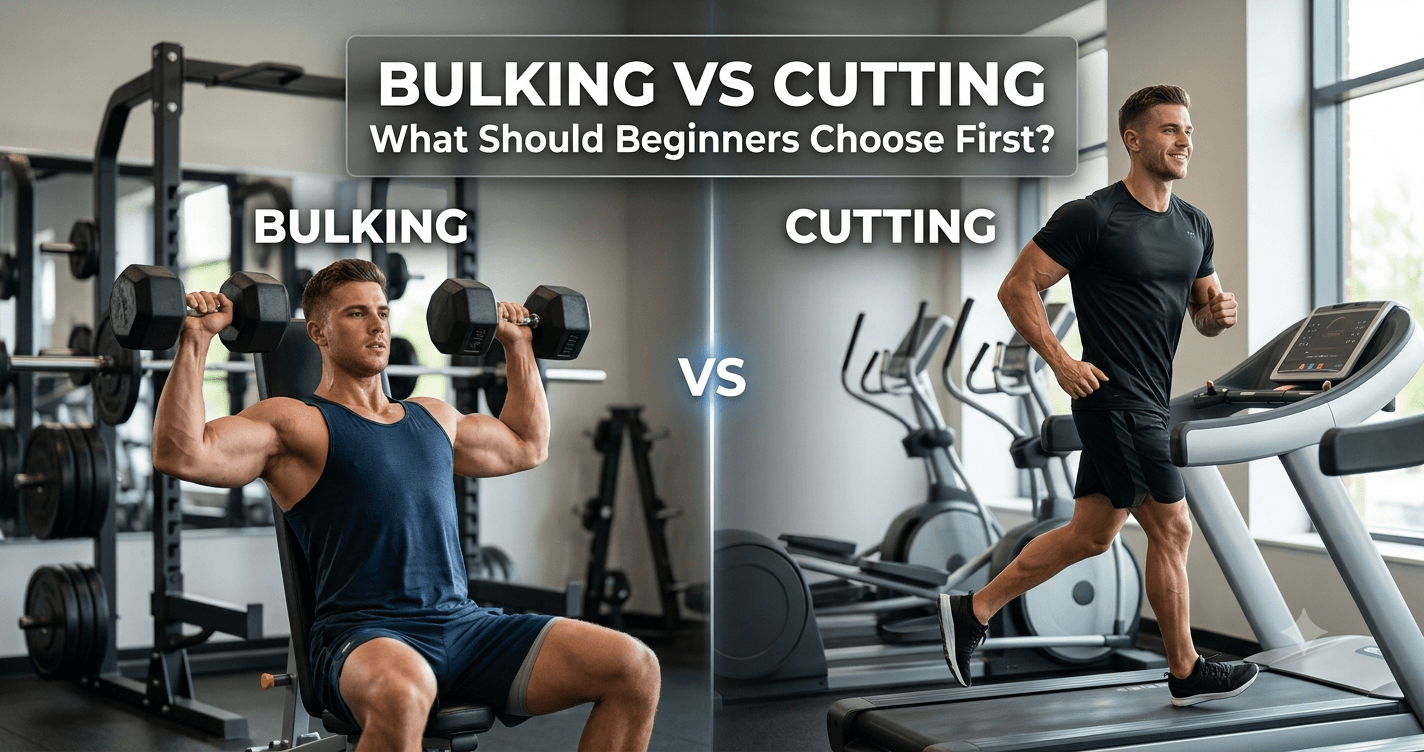
Bulking vs Cutting: What Should Beginners Choose First?
Introduction
When beginners start their fitness journey, one of the most common questions they ask is: Should I start with bulking or cutting? With so much fitness content available online, it can become confusing to understand which approach is right for your body and goals.
Some people focus on building muscle by eating more calories, while others try to lose fat and get a lean physique. Both bulking and cutting are important phases in fitness, but choosing the right one depends on your current body condition, goals, and experience level.
For beginners, understanding the difference between bulking and cutting is essential because starting with the wrong approach can slow down progress.
In this article, we will explain what bulking and cutting mean, their benefits, and what beginners should choose first to achieve better fitness results.
What Is Bulking?
Bulking is a fitness phase focused on building muscle and increasing body size. During a bulk, a person consumes more calories than their body burns. This extra energy helps support muscle growth when combined with strength training.
The main goal of bulking is not simply gaining weight but gaining quality muscle mass.
A successful bulk includes:
- Strength training
- Increased calorie intake
- High protein consumption
- Proper recovery
- Consistent progress tracking
There are two main types of bulking:
1. Clean Bulking
Clean bulking focuses on gaining muscle while limiting unnecessary fat gain.
A clean bulk includes nutritious foods such as:
- Lean meats
- Eggs
- Milk
- Rice
- Oats
- Fruits
- Vegetables
- Nuts
This approach helps you gain muscle in a healthier way.
2. Dirty Bulking
Dirty bulking involves eating a large amount of calories without focusing much on food quality.
While it may increase weight quickly, it can also lead to excessive fat gain.
For beginners, clean bulking is usually a better option because it supports long-term fitness goals.
What Is Cutting?
Cutting is a fitness phase focused on reducing body fat while maintaining muscle mass.
During cutting, a person consumes fewer calories than their body burns. This calorie deficit helps the body use stored fat for energy.
The goal of cutting is not just losing weight but achieving a leaner and more defined physique.
A successful cutting phase includes:
- High protein intake
- Regular strength training
- Cardio exercises
- Controlled calorie intake
- Proper sleep
Many athletes and fitness enthusiasts use cutting phases to improve muscle definition.
Bulking vs Cutting: Main Difference
The biggest difference between bulking and cutting is the goal.
Bulking:
- Goal: Build muscle
- Calories: Calorie surplus
- Weight: Usually increases
- Focus: Strength and muscle growth
Cutting:
- Goal: Lose fat
- Calories: Calorie deficit
- Weight: Usually decreases
- Focus: Fat loss and muscle definition
Both phases are useful, but the correct choice depends on your starting point.
Should Beginners Bulk or Cut First?
For most beginners, the answer depends on their current body composition.
There is no single rule that works for everyone.
Beginners With High Body Fat
If you are overweight or have a high percentage of body fat, starting with a cutting phase may be better.
Reasons:
- Reduces excess fat
- Improves health
- Creates a better base for muscle building
- Makes your physique look more defined
During this phase, focus on:
- Strength training
- Protein-rich foods
- Moderate calorie deficit
- Regular activity
Beginners Who Are Skinny or Underweight
If you have a naturally thin body and struggle to gain weight, bulking may be the better choice.
A proper bulk can help you:
- Gain muscle mass
- Increase strength
- Improve body shape
- Build confidence
However, beginners should avoid eating unlimited junk food. Focus on quality calories from healthy foods.
Beginners With Average Body Composition
Many beginners have a normal body weight but lack muscle definition. In this situation, a balanced approach called body recomposition can work well.
Body recomposition means:
- Building muscle
- Losing fat at the same time
This can be achieved through:
- Strength training
- Eating enough protein
- Maintaining balanced calories
- Staying consistent
Benefits of Bulking
Bulking provides several advantages:
1. Increased Muscle Growth
A calorie surplus provides your body with extra energy needed for building muscle.
2. Improved Strength
More muscle mass usually leads to better strength and workout performance.
3. Better Body Shape
A successful bulk can help create a stronger and more athletic appearance.
4. Faster Progress for Skinny Beginners
People who struggle to gain weight can see significant improvements through proper bulking.
Benefits of Cutting
Cutting also offers important benefits:
1. Reduces Body Fat
Cutting helps remove excess fat and improves muscle visibility.
2. Improves Definition
A lower body fat percentage makes muscles look more defined.
3. Supports Healthy Weight Management
A controlled cutting phase can improve overall fitness and lifestyle habits.
4. Builds Discipline
Cutting teaches portion control and better food choices.
Common Mistakes Beginners Make
1. Starting a Bulk Without Knowing Their Body Type
Some beginners start bulking even when they already have high body fat, which can make fat loss harder later.
2. Eating Too Much During Bulking
A huge calorie surplus does not mean faster muscle growth. It often leads to unnecessary fat gain.
3. Cutting Too Aggressively
Extreme dieting can cause muscle loss, low energy, and poor workout performance.
4. Ignoring Strength Training
Both bulking and cutting require resistance training to build and maintain muscle.
5. Expecting Fast Results
Fitness transformation takes time. Consistency matters more than quick changes.
Nutrition Tips for Bulking and Cutting
During Bulking:
Focus on:
- Eating enough calories
- Getting sufficient protein
- Choosing nutritious foods
- Increasing strength gradually
Protein sources include:
- Chicken
- Eggs
- Fish
- Paneer
- Dal
- Soy products
During Cutting:
Focus on:
- Maintaining protein intake
- Eating vegetables and whole foods
- Creating a moderate calorie deficit
- Avoiding extreme diets
How Long Should Each Phase Last?
The duration depends on individual goals.
A beginner may spend several months focusing on building healthy habits before deciding to bulk or cut.
The most important things are:
- Tracking progress
- Adjusting your plan
- Staying consistent
Fitness is a long-term process, not a short-term challenge.
Conclusion
Bulking and cutting are both effective strategies for improving your physique, but the right choice depends on your current body condition and fitness goals.
Beginners who have higher body fat may benefit from cutting first, while naturally thin beginners may benefit from a controlled bulk. Some beginners may also achieve great results through body recomposition by building muscle and losing fat together.
The most important thing is to focus on proper nutrition, regular strength training, and consistency.
Instead of following trends, understand your body, choose the right approach, and build habits that help you become stronger and healthier over time.
